
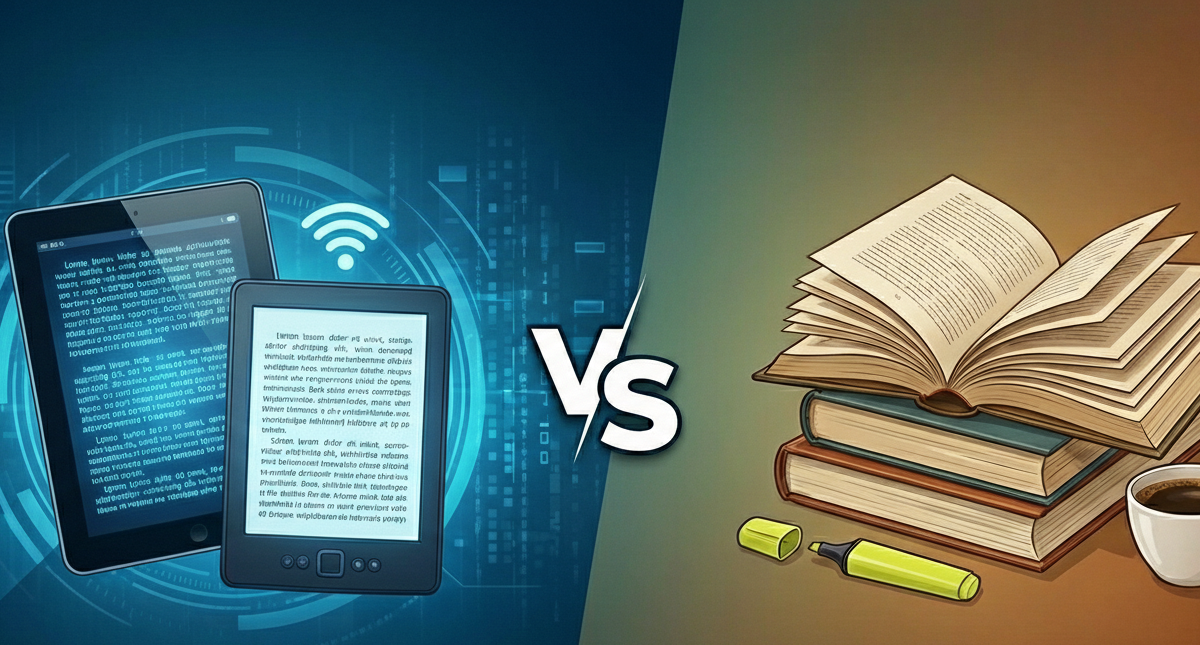
Digital vs. Physical: Which Textbooks are Better?
As the new semester kicks off, every South African student faces the same dilemma: Do you go for the sleek, portable e-book or the heavy, traditional printed textbook?
On the surface, digital seems like the obvious winner for the modern “paperless” student. But when you look at the actual cost over a three-year degree and the impact on your final marks, the answer isn’t so simple.
Let’s break down the battle between digital and physical to see which one truly deserves your NSFAS allowance.
1. The Upfront Cost vs. The “Hidden” Expenses
At first glance, digital textbooks are cheaper. At major South African retailers like Van Schaik, an e-book can often be found for roughly half the price of a brand-new physical copy. For example, a heavy Economics text might cost over R1,000 in print but only around R412 in digital format.
However, “digital” doesn’t always mean “forever.” Many e-textbooks are actually rentals or licenses that expire after 180 or 360 days. If you need that book for a year-long course or a follow-up module next year, you might end up paying twice. Physical books, once bought, are yours for life.
2. The Resale Value: The Ultimate Budget Hack
This is where the math shifts in favor of physical books.
- Digital: Once the semester is over, your e-book has zero resale value. It stays locked in your app or simply expires.
- Physical: A well-kept physical textbook is an asset. In South Africa, students can typically resell their used books for 40% to 65% of the original price.
If you buy a used book on BookLoop for R500 and sell it at the end of the year for R300, your “net cost” for that textbook was only R200. That is significantly cheaper than any digital license you can buy.
3. Brain Power: How You Actually Learn
Recent studies at South African institutions like the University of Fort Hare show that while students love the convenience of e-books, they still prefer print for actual studying.
Research suggests that students using printed materials often achieve significantly higher comprehension scores compared to those reading on screens. Why?
- Tactile Memory: Flipping physical pages helps your brain map where information is located.
- Fewer Distractions: A physical book doesn’t send you TikTok notifications while you’re trying to understand Accounting.
- Annotation: While some e-readers allow notes, many students find that handwriting highlights and marginalia in a physical book leads to better retention.
4. Convenience and Portability
Digital definitely wins the “backpack” battle. Carrying five heavy Law or Medical textbooks can weigh over 10kg, whereas a single tablet can hold your entire degree’s library.
Digital books also offer the “Search” (Command+F) function, which is a lifesaver when you’re looking for a specific term five minutes before a test. However, digital relies on battery life and stable internet for downloads—two things that aren’t always guaranteed during load-shedding.
| Feature | Digital (e-Book) | Physical (Print) |
| Upfront Price | Cheaper (usually ~50% off) | More expensive |
| Resale Value | R0 (Zero) | High (40%–65% back) |
| Study Focus | High distraction risk | High focus / Better retention |
| Portability | Excellent (Lightweight) | Poor (Heavy) |
| Lifespan | Often expires (1 year) | Permanent |
Our Recommendation:
- Go Digital for: General elective subjects, books you only need for a few weeks, or supplementary reading where “Searchability” is key.
- Go Physical for: Your major subjects (Law, Accounting, Science, Engineering) where deep focus is required and the books have high resale value on platforms like BookLoop.
Don’t pay full price for brand-new books. Browse the latest used textbook listings on BookLoop and get the best of both worlds: the quality of print at the price of digital.